
Day: November 19, 2025

Backtesting the VWAP MT5 Indicator for Prop Firm Day Trading RulesBacktesting the VWAP MT5 Indicator for Prop Firm Day Trading Rules

Day trading requires precision, fast decision-making, and the ability to execute high-probability trades consistently. Proprietary trading firms (prop firms) look for traders who can meet strict profitability targets while adhering to risk management rules. The Volume Weighted Average Price (VWAP) indicator is a powerful tool that helps traders make better-informed decisions by providing a benchmark for intraday price action. MetaTrader 5 (MT5) is a popular platform for implementing and backtesting trading strategies, and combining VWAP with MT5 indicators allows for an advanced, data-driven approach to day trading. In this article, we’ll explore how backtesting the VWAP MT5 indicator can help traders refine their strategies, meet prop firm rules, and qualify for funding.

What is VWAP and Why is it Important in Day Trading?

The Volume Weighted Average Price (VWAP) is an indicator that calculates the average price of a security, weighted by its trading volume. It is often used by institutional traders and day traders to assess the fair value of an asset throughout the trading day. VWAP provides key insights into market sentiment, highlighting where most of the trading volume has occurred at different price levels. For day traders, the VWAP is especially useful for identifying potential support and resistance levels. When the price is above the VWAP, it’s often considered a bullish trend, while trading below the VWAP signals a bearish bias. In prop firm day trading, this indicator is crucial because it helps traders determine whether to enter or exit trades in alignment with the prevailing market sentiment.

Using VWAP with MT5 Indicators for Backtesting

Backtesting is an essential process for refining any trading strategy, especially when using complex indicators like VWAP. On the MT5 trading platform, traders can backtest VWAP-based strategies with historical data to determine their effectiveness. MT5 offers a built-in Strategy Tester, which allows traders to simulate trades based on VWAP signals, refining their entry and exit points. Combining the VWAP with other MT5 indicators such as Moving Averages (MA), RSI, and MACD enhances its effectiveness in identifying optimal trade setups. For example, a trader might look for buy signals when the price is above the VWAP and the RSI is oversold, or use MACD to confirm momentum before entering a position. Backtesting this combination ensures that traders can fine-tune their strategies to maximize profitability and minimize risk.

The Process of Backtesting VWAP Strategies on MT5

The process of backtesting VWAP strategies on MT5 begins by selecting the desired time frame, typically based on the trader's preferred day trading strategy. The trader then configures the VWAP indicator on the chart and tests the strategy against historical data. MT5’s Strategy Tester allows for adjustments to be made in real time, enabling the trader to modify key parameters such as the time periods for Moving Averages or the sensitivity of other indicators. Traders can also backtest with different market conditions, helping them understand how the VWAP strategy would perform during periods of high volatility or low liquidity. This approach offers a comprehensive evaluation of a VWAP-based strategy’s potential and helps identify areas for optimization before live execution.

Risk Management and VWAP in Prop Firm Day Trading

For traders working with prop firms, adhering to strict risk management rules is crucial. VWAP-based strategies naturally align with prudent risk management practices by providing clear entry and exit points. A trader can use VWAP as a dynamic support or resistance level, placing stop losses just below or above the VWAP line depending on their trade direction. The advantage of VWAP in risk management is that it adjusts to the market’s volume, which means that it can offer more reliable levels of support or resistance compared to traditional indicators. For prop firm traders, using VWAP alongside stop-loss limits and take-profit targets ensures that the trader does not exceed their daily loss limit or deviate from the risk parameters required by the firm.

Refining VWAP Strategy for Instant Funding Qualification

Prop firms often have performance requirements for instant funding qualification, such as achieving a certain profit target while keeping risk levels low. Backtesting VWAP strategies is an effective way to determine if a trader can meet these requirements consistently. By testing different combinations of the VWAP, RSI, MACD, and Moving Averages, traders can find optimal parameters that maximize profit potential while adhering to prop firm risk management rules. For example, adjusting the VWAP to different timeframes (e.g., 5-minute, 15-minute, or hourly) can help tailor the strategy to the trader's preferred style, whether they focus on scalping or swing trades. By backtesting these configurations, traders can fine-tune their strategy to meet prop firm targets for instant funding, demonstrating their ability to generate consistent profits with a disciplined approach to risk.

The Benefits of Backtesting for Prop Firm Traders

Backtesting offers several advantages for traders who aim to qualify for instant funding with a prop firm. It allows traders to evaluate the effectiveness of their VWAP strategies over historical data, providing insights into performance metrics like win rate, risk-reward ratio, and drawdown. MT5’s Strategy Tester provides detailed reports, which are essential for analyzing the profitability and robustness of a strategy. Traders can experiment with different risk management rules, such as adjusting position size, stop loss levels, and take profit targets, to see how these factors impact the overall success of the strategy. By backtesting these strategies, traders can demonstrate their ability to stick to a proven, reliable method, which is crucial for prop firms looking for consistency in their traders' performance.

Conclusion

Backtesting the VWAP MT5 indicator is an invaluable tool for day traders aiming to meet the strict performance criteria set by proprietary trading firms. By leveraging the MT5 trading platform's advanced features, traders can refine their VWAP strategies, optimize risk management practices, and test their strategies against historical data. This ensures that their approach is data-driven and effective before applying it in live market conditions. With its ability to provide clear entry and exit signals, the VWAP indicator allows traders to align their trades with market sentiment while adhering to risk management protocols. For prop firm traders looking to qualify for instant funding, mastering VWAP strategies through backtesting on MT5 will be key to consistent success in the fast-paced world of day trading.
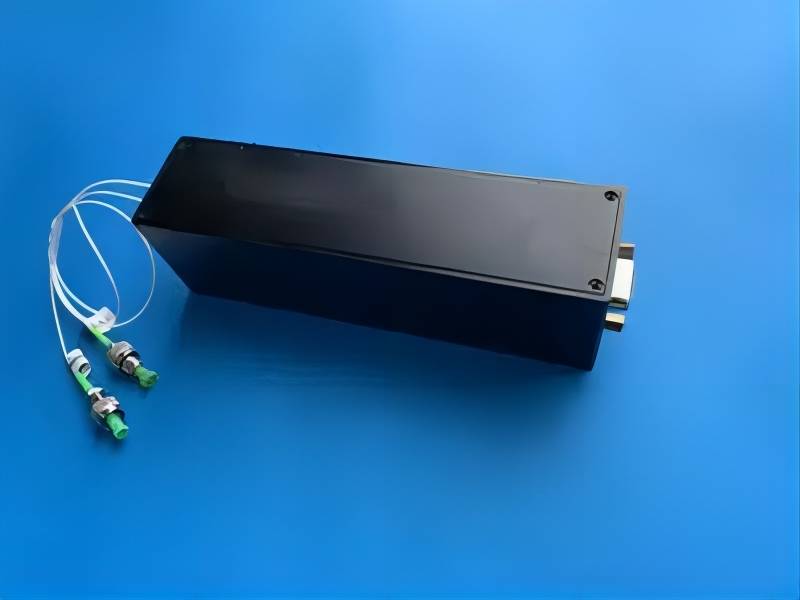
Photonics Advancements in Fiber Acousto Optic Modulators for Enhanced Optical ApplicationsPhotonics Advancements in Fiber Acousto Optic Modulators for Enhanced Optical Applications

The area of photonics has witnessed exceptional developments, particularly in the development of different modulators that play crucial roles in countless optical applications. Amongst these, fiber acousto-optic modulators (AOMs) and their many variations, such as space AOMs and free-space AOMs, stand apart due to their flexibility and performance. An acousto-optic modulator uses sound waves to regulate the strength, frequency, or phase of light passing through a tool, using an efficient approach for pulse modulation. With the expanding need for high-resolution and accuracy applications, these devices have actually become indispensable in locations like telecommunications, clinical imaging, and clinical research.

Among one of the most in-demand features in laser modern technology is ultra-narrow linewidth, generally associated with single-frequency lasers. These lasers generate light with an exceedingly narrow spooky size, making them ideal for different intricate applications, consisting of meaningful communication systems and high-resolution spectroscopy. A fiber-coupled AOM, which integrates the AOM into a fiber optic system, gives smooth combining with single-frequency fiber lasers. This combination shows the trend towards boosted density and efficacy in optical systems without compromising performance.

The utility of fiber optic delay lines can not be overstated, particularly in creating sophisticated optical systems that need specific timing and synchronization. These delay lines harness the intrinsic homes of optical fibers to handle light signals effectively, enabling designers and scientists to explore high-speed data transmission or complex timing trying outs minimal loss of fidelity. The electric optical fiber delay line works as a central part in this context, assisting in the control of light signals to suit details demands.

Discover acoustic optical modulator the current developments in photonics, concentrating on the essential function of fiber acousto-optic modulators in boosting laser applications, telecommunications, and accuracy optical systems for varied industries.

Modulators are important in laser systems, playing a crucial duty in transforming constant wave outcomes right into pulse styles. Acousto-optic Q-switch modulators serve this specific function, enabling fast modulation of laser results, which results in high-peak power pulses. This capacity is vital in applications such as material processing, where precision and speed are necessary. The choice between an AOM and an electro-optic modulator (EOM) often arises in discussions bordering modulation strategies. While both offer the key feature of pulse modulation, an AOM normally shows greater optical power dealing with capabilities and faster changing times contrasted to EOMs, making AOMs specifically helpful in high-energy laser applications.

The difference in between acousto-optic buttons and modulators is a critical facet of comprehending how these devices work in various scenarios. Acousto-optic switches successfully redirect beams, hence making it possible for various transmitting capabilities within optical systems. On the other hand, a modulator changes the light’s residential or commercial properties, straight impacting the beam of light’s qualities. This difference marks their particular functions in laser systems and highlights the variety of applications each device accommodates.

fiber acousto optic modulator

Acousto-optic devices have progressively acquired grip in the market, driven by the intensifying demand for sophisticated optical innovations. The acousto-optic modulator market is seeing substantial development due to applications in telecommunications, armed forces systems, and commercial production.

Narrow linewidth fiber lasers display secure exhaust with marginal spooky spread, catering to applications in fiber-optic interactions and sensing innovations. Combining these fibers with sophisticated modulators makes it possible for researchers to check out new frontiers in optical interaction systems.

Acoustic optical deflectors add to the adaptability of optical systems, using a means to adjust light dynamically and effectively by utilizing acoustic waves as the regulating device. Such devices can be discovered in numerous applications, from laser scanning systems to innovative imaging methods. By using the principles of acousto-optics, these deflectors aid in achieving specific and quick modifications in the light beam’s trajectory without the demand for complex mechanical components.

In discovering the sorts of pulse modulation, one understands the intricacies and range integral in the area. Pulse modulation methods, such as pulse-width modulation (PWM) and pulse-position modulation (PPM), allow control of light based upon emission to produce differing signal types. These techniques cultivate advancements in electronics and photonics, from controlling laser outputs to enhancing the performance of fiber optic systems.

Further factor to consider of optical passive components reveals their crucial duty in improving system dependability. Their contribution to total system efficiency is vital, mostly when incorporated with modulators and various other dynamic optical devices.

The growing concentrate on space applications emphasizes the demand for trusted and durable optical systems that can operate properly in severe conditions. Space acousto-optic modulators, in certain, suit the distinct demands of space objectives, where elements such as radiation exposure and temperature changes can substantially impact performance. The advancement of space-grade acousto-optic devices makes sure that communication and data collection remain undisturbed in the severe settings of space.

Acousto-optic Q-switching represents among the most effective approaches of creating high-energy pulses, vital for applications ranging from laser noting to medical treatments. The modulation abilities intrinsic in AOMs permit them to adjust to differing demands, optimizing pulse period and power result. They provide a cutting-edge pathway to boost laser applications throughout varied fields.

As we dive further right into the future of photonics, it comes to be increasingly clear that technology in laser modulators and acousto-optic modern technologies is critical. The advancements in modulator drivers boost the efficiency with which AOMs and EOMs operate, making it possible for quicker and a lot more dependable efficiency. The crossover in between developments in modulation and the enhancing need for higher bandwidth and reduced latency in interaction systems suggests a future abundant with chances for reinforced optical communications.

Recognizing the fundamental mechanics that underpin acoustic optical modulators will lead to premium design and performance improvements as research study proceeds to flourish. The expedition of new materials, assimilations, and strategies in areas like micro-nano manufacture will likely generate devices with also finer control and expanded operational life times. These advancements not only promise boosted functionality for existing systems yet invite totally new applications within emerging technologies in quantum computing, robotics, and advanced production.

In summary, the domain of acousto-optic modulators and relevant fiber-optic innovations embodies rapid progress and complexity, acting as fundamental components within several modern-day optical applications. With the growing demand for accuracy and high efficiency in numerous markets, the development of acousto-optic devices, such as fiber AOMs, continues to evolve, adapting to brand-new challenges and possibilities. As designers and researchers push the limits of advancement, these devices will certainly remain central to forming the future of optical communication, laser applications, and beyond, heralding a brand-new era of technological advancement.